
COLORADO REPORT

COLORADO RIVER WATER SHORTAGE
Last month we looked at the decreasing water in our aquifers on the Eastern Plains. This month we turn our attention to the perhaps catastrophic water issues of the Western Slope.
I grew up on the Western Slope and am pretty familiar with the water issues with which the family had to
live. Being honest, the western part of the state is basically desert, adobe hills and rocky canyons and
cliffs; but along the rivers, industrious Coloradans have created orchards, vineyards, cattle ranches and
grain crops. The people deal with floods in the spring and lack of water during hot times. Unfortunately,
there have been more dry times lately due to less snow in the mountains. Blue Mesa Reservoir
Delta County (where I grew up) suffered a devastating 100% total crop loss to their fruit industry. They had experienced an unusual early and warm spring which resulted in early blossoming. Then on April 17, a severe overnight freeze completely destroyed the vulnerable fruitlets. Despite growers utilizing wind machines and fires, long-standing local operations like Ela Family Farms and Topp Fruits lost everything.
To protect the orchards—which take 6–7 years to replace if they die of drought—Grand Valley producers have actively discussed emergency measures, such as letting row crops (corn and alfalfa) go dry so water can be prioritized for the fruit trees. Their water concerns are compounded by the irrigation system.
Grand Valley Irrigation Company operates the canal system that sends water to Palisade and Fruita from the Colorado River. Farmers buy shares and are given an allotment. Many farmers and fruit growers are concerned that because of problems with the Colorado River system, water to these canals may be reduced.
Compounding the financial hit, regional water supplies have dried up rapidly. Streams like the North Fork Gunnison River have dropped to critical late-season minimums. Since fruit trees are long-term investments, farmers must continue to pay fixed costs to water, prune, and keep their barren trees alive for future years.
The greatest problem is that all rivers on the Western Slope, now running low, flow into the Colorado River. The water in the Colorado River, according to an agreement made in 1922, belongs to seven states. These are divided into the Upper Basin (Wyoming, Colorado, Utah and New Mexico) and the Lower Basin (California, Arizona, and Nevada). The agreement gave each basin an equal share of 7.5 million acre-feet of water.
The major problem with this agreement was the assumption of water available which they based on “wet” seasons and the possibilities of warming and drought on the system. This unfortunately caused major conflict between Upper Basin and Lower Basins and also unfortunately, didn’t include Native Americans who own senior rights to 25% of the water. Because the foundational 2007 operational guidelines are set to expire at the end of 2026, the structural flaws of the Compact have triggered an unprecedented water crisis.
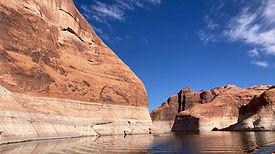
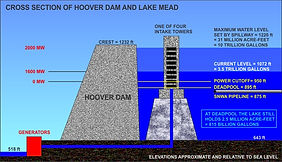
One of the best fishing trips I took was to Lake Powell. It was in the early 1990’s and the water was low at that time. Beautiful bluish green lake with pink cliffs, fresh air and great fishing. (My about the walleye I caught will have to wait.) We were concerned about the water level then but now, some 30 years later nothing is better only worse. Lake Mead and Lake Powell have dropped to critically low percentages of their capacity, bring
ing them dangerously close to minimum power pool
and dead pool thresholds that imperil hydroelectric
generation at Hoover and Glen Canyon dams.
A dead pool is the critical water level in a reservoir when the surface drops too low for water to
flow past a dam by gravity. The lake is not completely empty. A large amount of water remains,
but it sits below the dam's lowest outlet pipes. Because the water isbelow the intake tunnels,
the dam cannot release any water to the river or communities below it. Hydropower (electricity)
stops earlier at a level called the minimum power pool, while dead pool means the actual water
delivery stops.
All reservoirs in Colorado are endangered. Most are only 1/3 full. Dillon Reservoir which provides
water for Denver, has dropped 20 feet and Antero Reservoir has been drained, moving remaining
water to a safer facility. Blue Mesa Reservoir is 15-18% of capacity. When water levels fall toxic a
lgae increases. Visitors and pets should avoid swimming and or drinking from the waters.
Seventy percent of the water goes to agriculture. Alfalfa and hay are facing strict water allocations,
leading to lower crop volumes and smaller harvests. Forage and livestock producers who historically
relied on three or four alfalfa cuttings per season are frequently limited to just one or two due to early-
season irrigation shutoffs. Dwindling pasture growth and skyrocketing feed costs are forcing ranchers
to sell off cattle prematurely, shrinking local livestock numbers. Fallowed fields left without cover crops are suffering from intense wind erosion, degrading topsoil quality and increasing regional dust storms.
We have problems! We need to pray that governmental water officials have the wisdom to make the changes that need to be made. We sell millions of tons of alfalfa to China. Marijuana growers use much of Colorado’s water. Data centers gulp up gallons of water and unfortunately we are wasteful when it comes to water. If it is going to continue to stay hot and dry, we need to make changes. And… we need to pray for snow this winter and maybe invest in rain barrels.
Kathleen Nunn


I urge, then, first of all, that petitions, prayers, intercession and thanksgiving be made for all people— for kings and all those in authority, that we may live peaceful and quiet lives in all godliness and holiness.
1 Timothy 2:1-2 NIV